





Joburg Heritage Sites
Heritage Sites in the City of Johannesburg
Discover the rich history and cultural diversity of the city Johannesburg through its heritage sites. From iconic landmarks to historic neighborhoods and architectural gems, explore the places that have shaped the city’s unique identity. Each site offers a glimpse into Johannesburg’s vibrant past and its journey to becoming a dynamic metropolis.
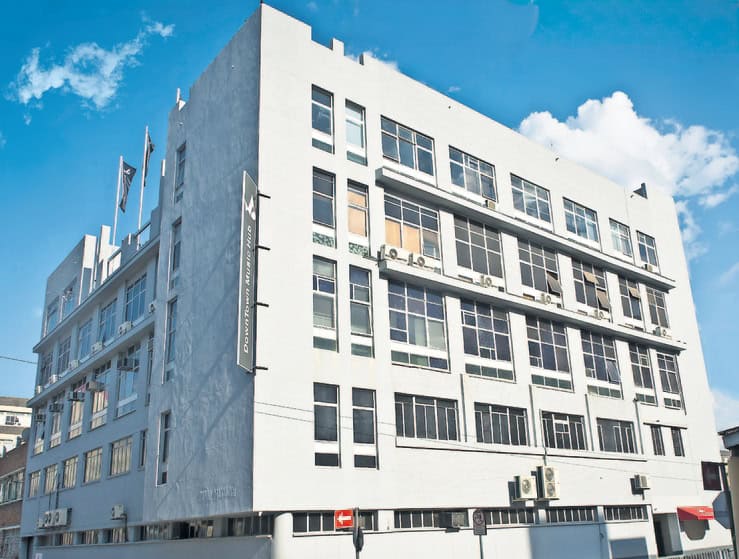
Downtown Music Hub
- 62 Goud Street, Johannesburg, 2049
Downtown Studios in Johannesburg has been a recording facility for over 40 years, with historical ties dating back to Gallo Africa. It provided a safe space for recording resistance songs during apartheid and is now a community center with world-class equipment, rehearsal/performance spaces, and a public museum. Its significance lies in the artists who have recorded there and taken local music production to new heights.
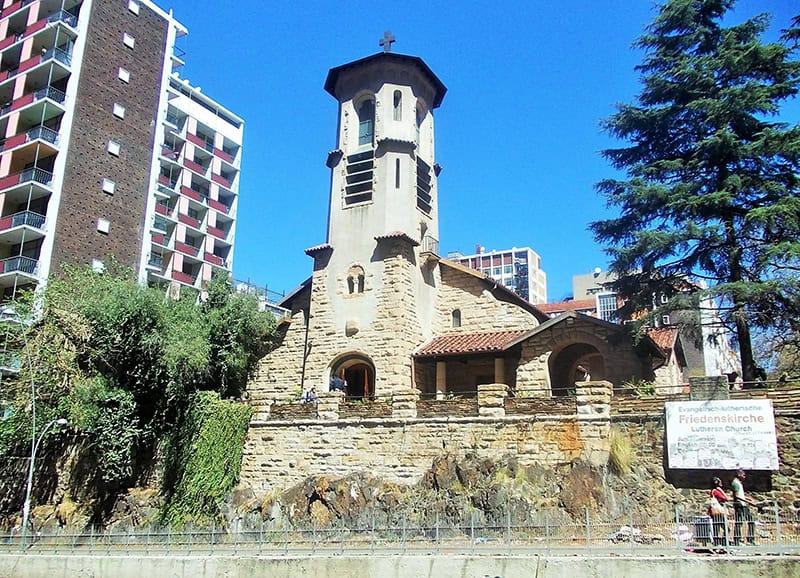
Evangelical Lutheran Friedenskirche (“Church of Peace”)
- 30 Edith Cavell Street Hillbrow, Johannesburg
The Friedenskirche (“Church of Peace”) dates from 1912, built to house a German congregation formed in Johannesburg in 1888. Designed by Theodore Schaerer and built of the stone from the ridge on which it rises, the Church remains an important landmark. Its distinctive Bavarian belltower was familiar to the German immigrants, many of them living in cosmopolitan Hillbrow. The site was declared a National Monument in 1986.
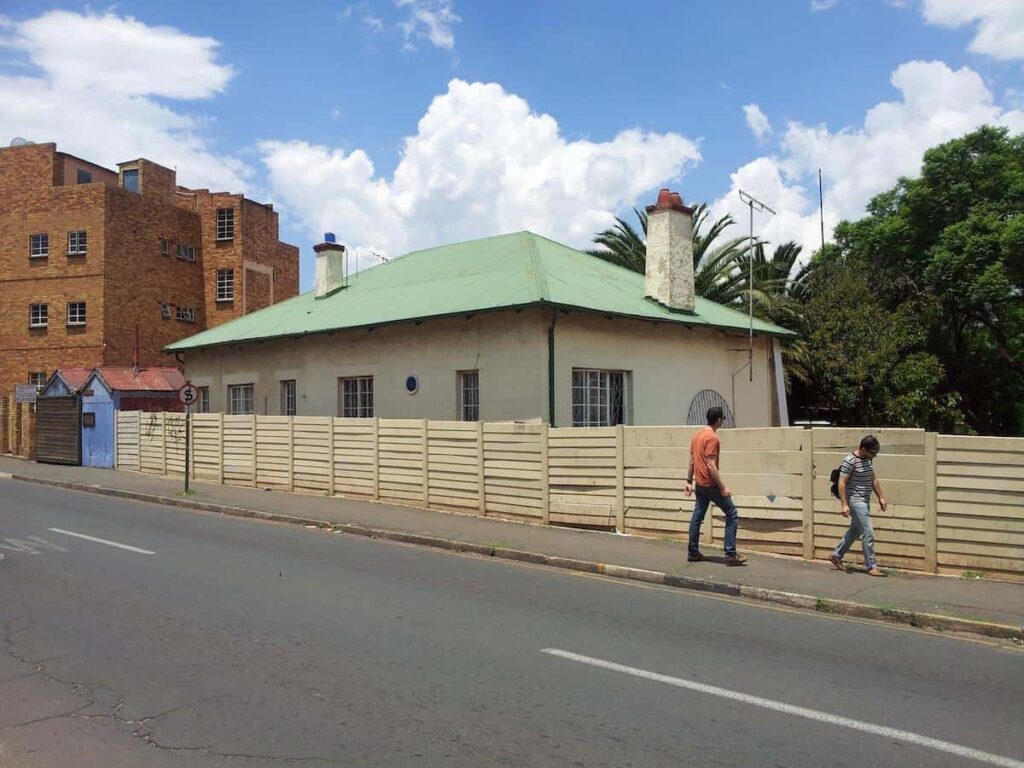
Herman Charles Bosman House, Bellevue
- 19 Isipingo Street,cnr. Bezuidenhout Road, Bellevue
Herman Charles Bosman was a gifted yet flawed writer who served time in prison for murder, but went on to write some of his most famous works. The house he lived in is important for its association with his life and anti-apartheid activists who visited.
Image: The Heritage Portal
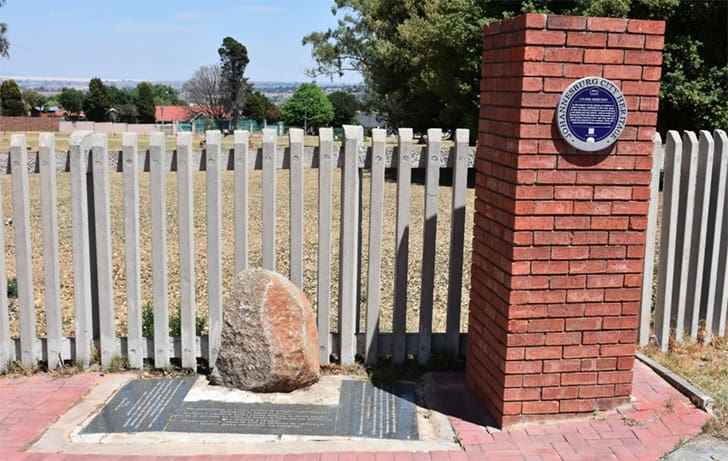
Juliwe Cemetery
- Van Santen Drive and Brian Street, Horizon View, Roodepoort West.
Juliwe Cemetery serves as a historical reminder of the forced removals of black communities during apartheid, which had a devastating impact on millions of people in South Africa. Despite the destruction of the rest of Juliwe Location, the cemetery survived due to community pressure, making it significant in resistance history. It is the only existing physical reminder of a black community that was uprooted from Roodepoort to Dobsonville, and it holds educational value by marking the shared history between the two areas.
Image: The Heritage Portal
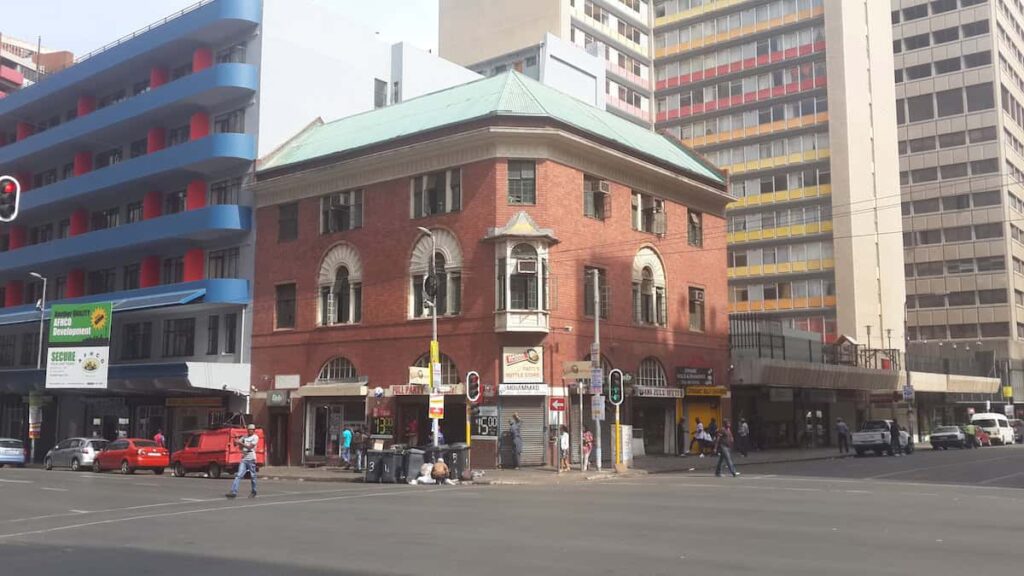
Kirchoff’s Building
- 143 Jeppe Street; 69 Loveday
Kirchhoff’s building in Johannesburg is a recognizable landmark that combines past charm with modern function. The simplicity of its mass, rich brickwork colour, and playful plaster detailing contribute to its unique character. Despite being a bottle store with street level clutter, the facade is well-preserved with masterful brickwork and attention to detail. The mix of masonry and ornate first-floor windows creates a distinctive visual impression. Johannesburg’s changing cityscape has transformed from colonial to vibrant African.
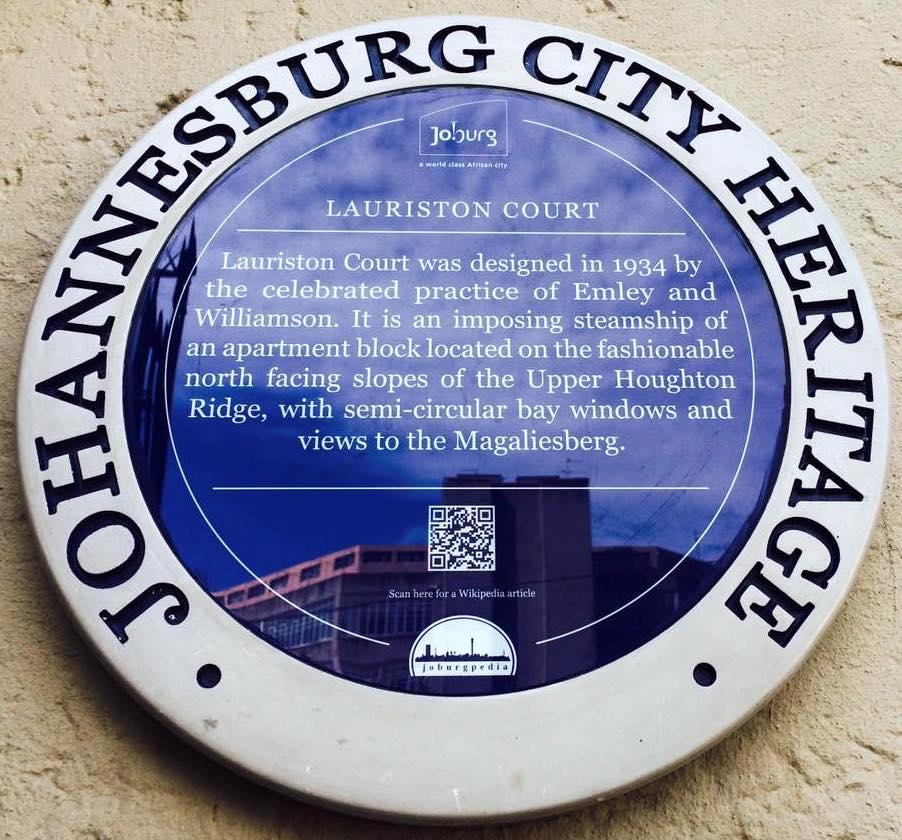
Lauriston Court
- 186 Louis Botha Avenue, Johannesburg
The building is an Art Deco style structure with a symmetrical design and cantilever bay windows on each wing. The façade is made of painted plaster with horizontal bands. The entrance leads to a split-level foyer with a unique curved ceiling and diagonal chessboard marble floor.
Image: The Heritage Portal
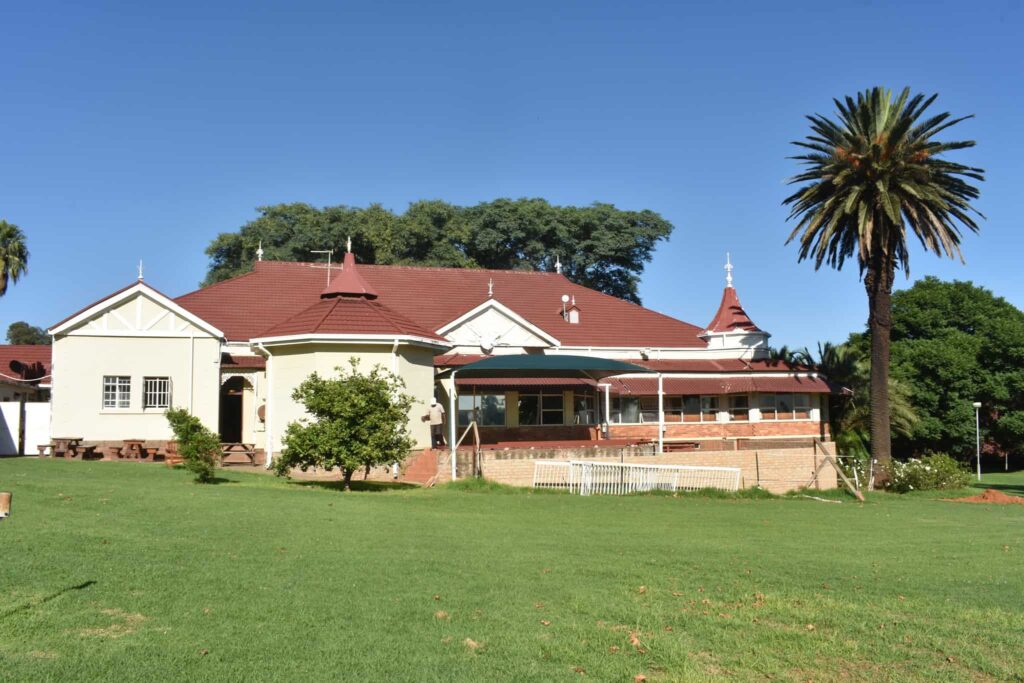
Mark’s Park
- Judith Rd, Emmarentia, Johannesburg, 2195
Mark’s Park Sports Club has top of the range sports facilities with strong tennis, soccer, rugby, and cricket sections that compete at top league levels. It has become a hotspot for annual events that encourage healthy lifestyles and well-being in the surrounding communities. The picturesque ‘green belt’ running so close to the largest city in South Africa is a haven for fauna and flora and breathes life into the surrounding suburbs.
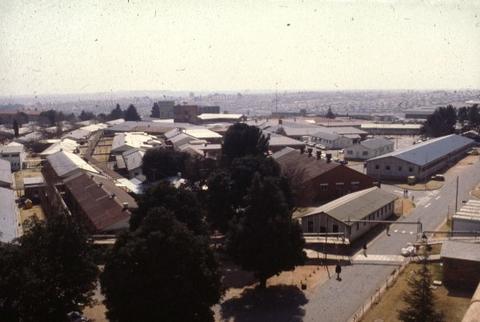
Military barracks at Chris Hani Baragwanath Hospital
- R68 Old Potchestroom road
Baragwanath began as a military hospital during World War II, before expanding to become the largest hospital in Africa. It treated wounded soldiers during the war and played an important, yet little-known, role in international medical services. Today, it is known for its service and achievement in providing medical care to civilians and local black patients, and its barracks-style buildings serve as a reminder of South Africa’s involvement in the war.
Image: South African Jewish Museum
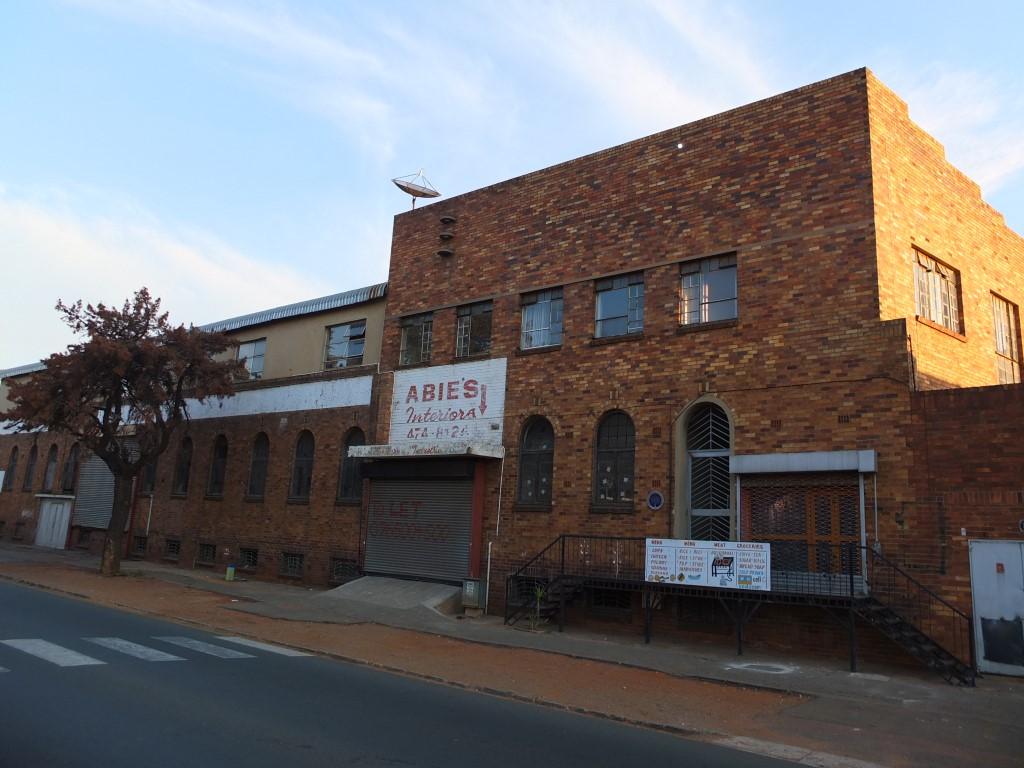
Offices and Printing works of ‘Bantu World Press’
- 11 Newclare Road (Albertina Sisulu Road), Industria
This site housed the offices and printing press of Bantu World – the first national publication aimed solely at a black readership, which became the forerunner of Drum Magazine and The Sowetan. Starting in the 1940s, key names in black journalism and literature were involved here, including Selope Thema, T.D. Mweli Skota, B.W. Vilakazi, S.E. Krune Mqhayi, A.C. Jordan, Peter Abrahams, Henry Nxumalo, Ernest Cole and Aggrey Klaaste.
Image: The Heritage Portal